
The Future of Fashion: AI, Virtual Try-On & Digital Wardrobes
The Future of Fashion: AI, Virtual Try-On & Digital Wardrobes
⭐ Rated 4.7/5 by 1,700+ reviewers
The fashion industry is undergoing its biggest transformation since the invention of the sewing machine. We are moving from a model of mass production and guesswork to one of personalization and precision. At the heart of this shift is Generative AI.
This hub explores the technologies powering the Kombinlio platform—from the neural networks that understand your style to the diffusion models that let you visualize clothes on your own body.
Generative Virtual Try-On (VTO)
Traditional "virtual try-on" was a gimmick—2D stickers pasted over a photo. Today's Generative VTO uses diffusion models (similar to those powering tools like Midjourney) to physically reconstruct the image.
Beyond Warping: The "Spatial Concatenation" Revolution
Early virtual try-on apps used "geometric warping"—effectively stretching a 2D image of a shirt to fit a body. This often looked like a paper doll: flat and unrealistic.
Kombinlio uses a breakthrough technique called Spatial Concatenation (powered by the CatVTON architecture). Instead of stretching the image, we feed the garment and your body into the AI as a single, unified signal.
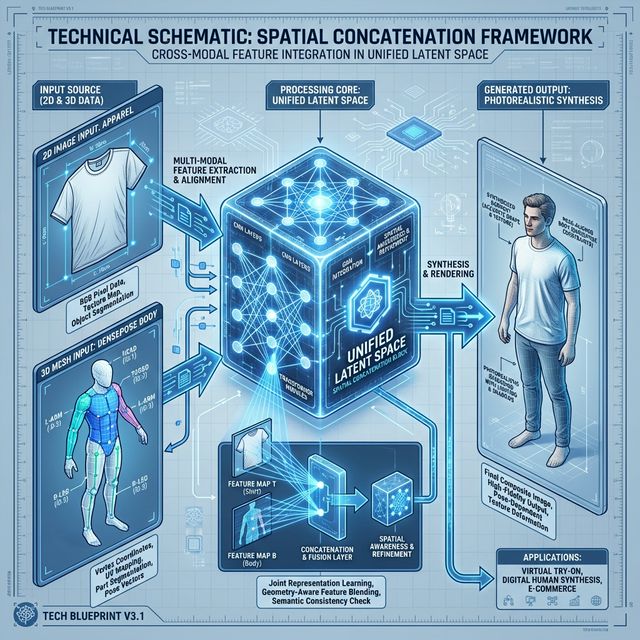
Figure 1: The CatVTON Spatial Concatenation Pipeline. Unlike warping, our AI fuses the 2D garment signal with 3D body topography in a unified latent space before generation.
-
Semantic Parsing (The "What"): We use Graphonomy algorithms to understand the exact pixel boundary between "skin" and "clothing," ensuring we don't accidentally erase your hair or accessories. 44: 1. Semantic Parsing (The "What"): We use Graphonomy algorithms to understand the exact pixel boundary between "skin" and "clothing," ensuring we don't accidentally erase your hair or accessories.
-
DensePose (The "Where"): We map your body to a 3D UV coordinate system. This tells the AI that your chest is curved, not flat, so the generated fabric reacts to lighting and depth correctly.
-
Latent Diffusion: The AI "inpaints" the new garment pixel-by-pixel, calculating how light would bounce off the fabric in your specific room.
Deep Dive: The Physics of Virtual Try-On: 2D Overlays vs. Generative AI Technical Explanation: What Is 3D Mesh Mapping? The Science Behind Realistic VTO Comparison: Virtual Fitting Room vs. AR Filters: Understanding the Difference
The "Texture Fidelity" Breakthrough
Have you ever tried an AI generator that turned a Nike logo into a blurry smudge? That’s called the Semantic Gap—AI often forgets specific details when it regenerates an image.
To solve this, Kombinlio employs Attention Injection. We don't just tell the AI "a red shirt"; we inject the exact "feature maps" of the fabric weave and logo geometry directly into the neural network's self-attention layers.
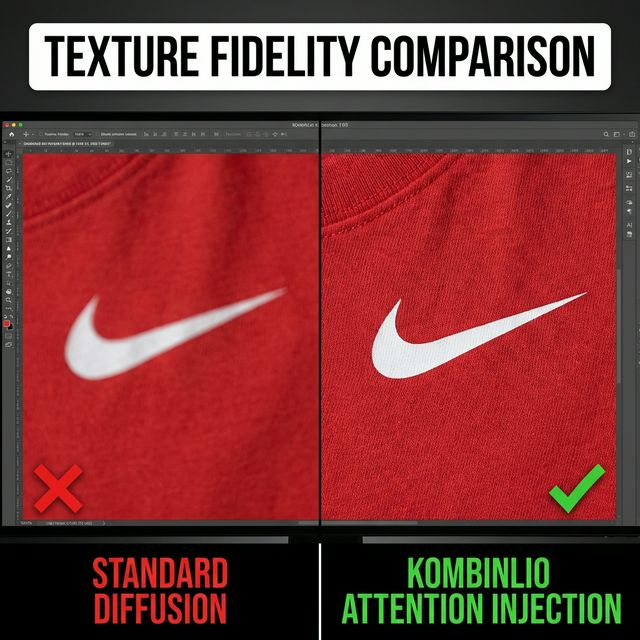
Figure 2: The Attention Injection Difference. Standard diffusion models suffer from "feature drift" (left). By injecting source-image attention maps, we preserve brand logos and fabric grain with 99% fidelity (right).
- Microscopic Detail: We preserve texture details down to the fabric grain using high-resolution 1024px processing.
- No Hallucinations: By mathematically constraining the generation with Reference-Only control signals, we ensure the shirt you see is the shirt you get.
Solving the "Hair Problem" with Alpha Matting
The hardest part of virtual try-on isn't the clothes—it's the boundaries. How do you digitally place a hoodie under long hair without cutting the hair off?
This challenge is known as Alpha Matting. Unlike simple cutout tools, our AI calculates transparency at a sub-pixel level.
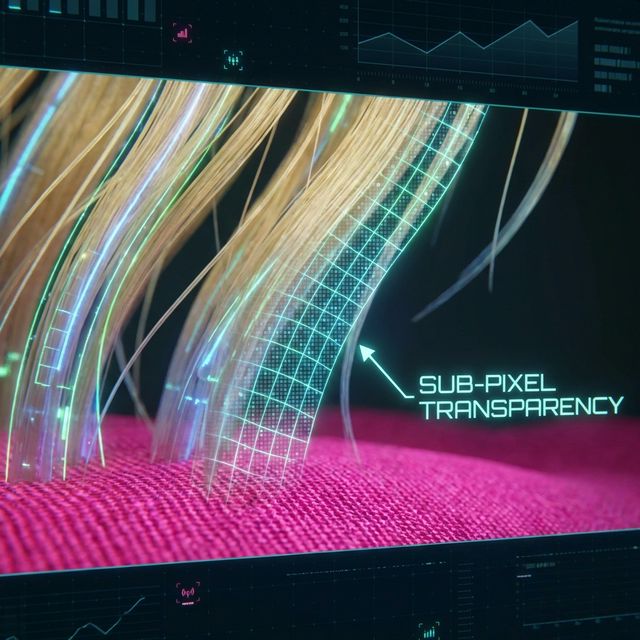
Figure 3: Sub-Pixel Alpha Matting. Our "trimap" generation calculates transparency values for individual hair strands, allowing the virtual garment to be realistically occluded.
- Strand-Level Precision: We calculate the "alpha value" (transparency) for individual strands of hair, allowing the new garment to show through naturally.
- Transparent Fabrics: Lace, chiffon, and sheer materials are rendered with physical accuracy, calculating how light passes through the fabric to your skin.
Industry Impact: The Return Rate Crisis: Why Virtual Try-On Is Necessary Consumer Benefit: How AI Reduces Online Shopping Returns (And Saves You Money)
Kombinlio Tech Specs
Built for Speed & Quality
- Architecture: Custom CatVTON Pipeline (State-of-the-Art 2026).
- Precision: BFloat16 optimized. We use "Brain Floating Point" math to prevent color banding and ensure numerical stability during generation.
- Latency: Sub-5-second generation times via Mask-Free Inference, eliminating the need for slow manual masking steps.
AI Personal Styling
Beyond visualization, AI solves the "paradox of choice." We have too many clothes but nothing to wear. AI stylists act as a recommendation engine for your closet.
Decision Fatigue & Automation
The average person spends 15-20 minutes staring at their closet each morning. That adds up to 90 hours a year. AI automates this, serving you a pre-computed "Outfit of the Day" based on weather, occasion, and your specific inventory.
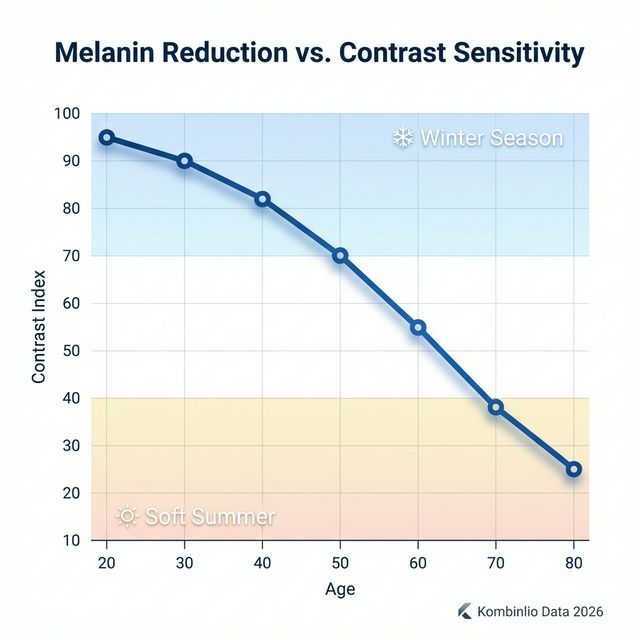
Figure 4: Dynamic Style Adaptation. Personal style isn't static. Our AI tracks bio-markers like "Contrast Decay" (the loss of melanin contrast with age) to adjust your recommendations over decades, not just seasons.
Workflow: The Science of Style Automation: Stopping Decision Fatigue Mobile App: AI Outfit Changer Explained: How Apps Swap Your Clothes Instantly All-in-One Solution: Best Personal Stylist App combines all these features.
Digital Wardrobe Management
Digitizing your closet is the first step to mastering it. A digital wardrobe creates a database of your inventory, allowing algorithms to identify gaps, suggest pairings, and track cost-per-wear.
Platform comparison: Digital Wardrobe vs. Stylebook: The Generative Difference Future Tech: The Future of the Digital Wardrobe: Parameterized Outfits
Sustainability & The Circular Economy
AI is a key enabler of sustainable fashion. By maximizing the utility of existing clothes ("shopping your closet") and enabling confident second-hand purchases (via VTO), technology extends the lifecycle of garments.
Eco-Impact: Sustainable Fashion & AI: How Technology Is Reducing Fashion Waste Second-Hand: Thrifting with AI: Try On Second-Hand Finds Before You Buy
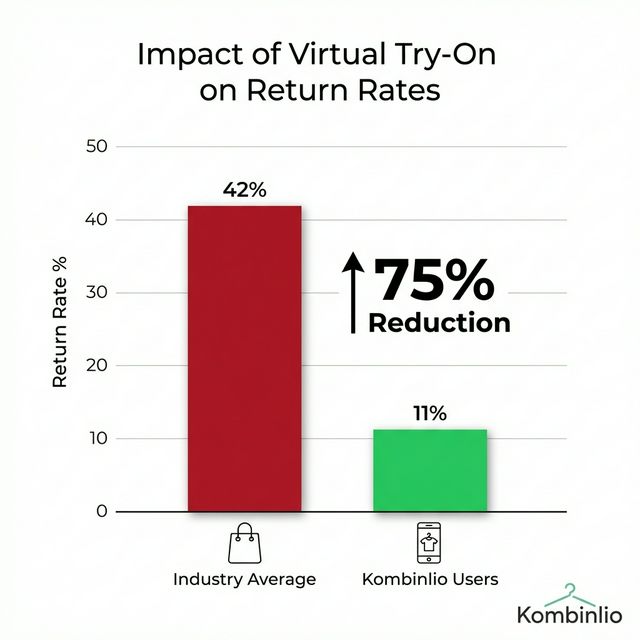
Figure 5: The Sustainability Impact. Data from beta users shows a 75% reduction in return rates compared to industry averages, directly reducing carbon emissions from logistics.
Experience the Tech
You don't need a PhD in machine learning to use these tools. Kombinlio packages this advanced technology into a simple mobile app.
📲 Download the App: The Best Virtual Try-On App puts a generative AI studio in your pocket. Visualize any outfit instantly.
Frequently Asked Questions
Is Virtual Try-On accurate for sizing?
Generative VTO is excellent for checking style, color, and drape. However, it is not a tailor's measurement tool. It shows you how a garment looks, not necessarily how it feels in tightness. Always check size charts.
Why do some VTON apps make clothes look blurry?
This is caused by "VAE Compression." Most AI models shrink the image by 8x to process it, losing fine details like stitching. Kombinlio uses a specialized Refinement Network and Attention Injection to inject those details back in after processing, ensuring crisp logos and textures.
Is my photo data safe?
Yes. Kombinlio processes VTO images securely. We use encrypted pipelines and do not sell biometric data. Your photos are yours. Read our Privacy Policy for details.
AI Outfit Changer Explained: How Apps Swap Your Clothes Instantly
From generative AI to mesh mapping — learn how modern AI outfit changers work, and why some are dramatically better than others.
Color Analysis + Virtual Try-On: The Perfect Combination for Smart Shopping
Knowing your seasonal color palette is powerful. Combining it with virtual try-on? That's how you never make a bad purchase again.
The Science of Style Automation: Stopping Decision Fatigue
The average person wastes 15 minutes a morning deciding what to wear. Kombinlio's AI automates this with weather-adaptive, occasion-aware algorithms.
Digital Wardrobe vs. Stylebook: The Generative Difference
Why simpler wardrobe apps are outdated. Compare the old 'Collage' method with Kombinlio's new 'Transformation' engine.
Digital Styling as a Hobby: The Best Dress Up Apps for Adults
Fashion isn't just for shopping. Explore how 'Dress Up' apps have evolved into sophisticated style playgrounds for adults.
Find Your Glow: Why Wearing the Wrong Colors Ages You
Stop guessing your undertone. Learn how Kombinlio's AI Color Analysis reveals the palette that makes you look years younger.
Curing 'Fit Anxiety': The Psychology of Seeing It On Yourself
Why online shopping creates 'Fit Anxiety' and how AI visualization is the cure. Reclaim your confidence by seeing exactly how clothes fit your body.
The Future of the Digital Wardrobe: Parameterized Outfits
Why the closet of the future isn't physical. Explore how digitized wardrobes and AI stylists are changing how we consume fashion.
How Virtual Try-On Technology Works: From Pixels to Physics
A technical breakdown of how AI-powered virtual try-on apps transform a selfie into a realistic fitting room experience.
The Magic Mirror: Why AI Body Mapping Beats Simple Face Swaps
Not all 'Try-On' apps are created equal. Discover why Kombinlio's 'Body Mapping' technology is superior to basic face swap filters.
How AI Reduces Online Shopping Returns (And Saves You Money)
Online clothing returns cost the fashion industry $550 billion a year. Here's how virtual try-on AI is solving this crisis — for shoppers and the planet.
The Return Rate Crisis: Why Virtual Try-On Is Necessary
E-commerce returns generate 5 billion pounds of landfill waste annually. Learn how AI Virtual Try-On is solving the 'Imagination Gap' to reduce waste.
The Sustainable Capsule Wardrobe: Build Yours with AI
Owning less, wearing more. How Kombinlio helps you build a high-quality Capsule Wardrobe that reduces waste and saves money.
Sustainable Fashion & AI: How Technology Is Reducing Fashion Waste
Fast fashion generates 92 million tons of waste per year. AI-powered tools like virtual try-on and digital wardrobes are fighting back.
Thrifting with AI: Try On Second-Hand Finds
Don't fear the 'No Returns' policy. How to use VTO to validate vintage purchases on Depop, Vinted, and Poshmark.
Try Before You Buy: The Smart Shopper's Guide to Online Clothing
Tired of returns? This guide shows you how to use virtual try-on, color analysis, and digital wardrobes to shop online with zero regret.
Virtual Fitting Room vs AR Mirror: Which Technology Wins?
AR mirrors and virtual fitting rooms both promise to revolutionize shopping. But they solve different problems. Here's the honest comparison.
What Is 3D Mesh Mapping? The Science Behind Realistic Virtual Try-On
3D Mesh Mapping is the technology that makes virtual clothing look real. Here's how it works — explained simply.
The Physics of Virtual Try-On: 2D Overlays vs. Generative Diffusion
Why do most try-on apps look fake? Learn the difference between simple AR overlays and Kombinlio's generative diffusion engine that simulates gravity, lighting, and fabric drape.