
The Ultimate Guide to Seasonal Color Analysis (12-Season System)
The Ultimate Guide to Seasonal Color Analysis (12-Season System)
⭐ Rated 4.7/5 by 1,700+ reviewers
Decoding Your Personal Color Architecture
Color is not just aesthetic; it is physics. It is the reflection of light off surfaces. When specific wavelengths reflect off your skin, hair, and eyes, and interact with the wavelengths reflecting off your clothing, they create either harmony or chromatic dissonance.
Seasonal Color Analysis (SCA) is the systematic study of this interaction. It transitions personal style from a subjective guessing game to a precision-driven discipline. The right colors do more than just smooth your complexion; they trigger Enclothed Cognition—a psychological phenomenon where your clothing actively influences your cognitive processing and confidence levels.
This hub is the definitive technical resource for the 12-Season System used by professional image consultants and the Kombinlio AI.
The Theory: Munsell Color System & Flow Theory
Professional analysis relies on the Munsell Color System, which defines color through three critical dimensions:
- Hue (Temperature): The continuum between Warm (Yellow/Orange based) and Cool (Blue based). In our analysis, we look for the dominance of Melanin (warmth) vs. Hemoglobin (coolness) in your skin tone.
- Value (Depth): The luminosity of the color, ranging from Light (high luminance) to Deep (low luminance). This aligns with the concept of "Contrast" in your features.
- Chroma (Saturation): The purity of the color. High chroma indicates "Clear" or "Bright" seasons (pure spectral hues), while low chroma indicates "Muted" or "Soft" seasons (grey/dusty content).
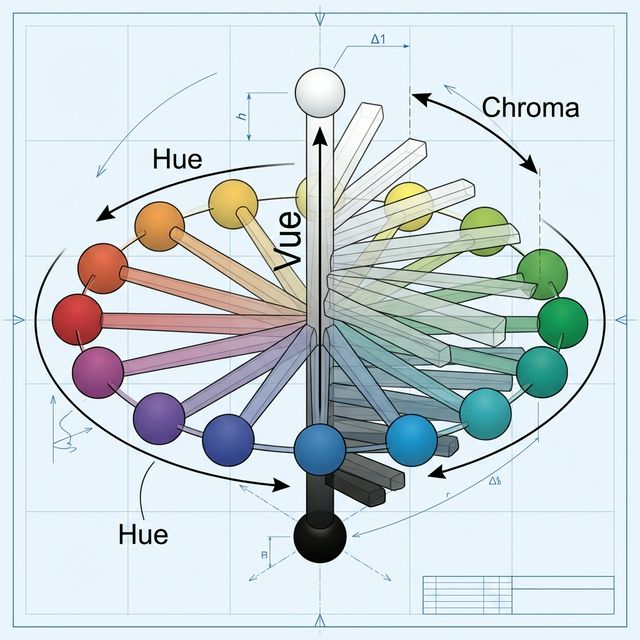
Figure 1: The Munsell Color System. The mathematical foundation of Color Analysis. A "Season" is simply a specific coordinate zone within this 3D color space.
The "Flow Theory"
Most people are not exclusively one "True" season. Flow Theory recognizes that you may fit into "neutral" zones. For example, a Deep Autumn flows into Winter, borrowing its depth but retaining Autumn's warmth. This requires a granular 12-season approach rather than the basic 4-season model.
The Science: The 12-Season Color System: Technical Definitions & Munsell Context
Step 1: Determining Your Contrast & Undertone
Forget the outdated "Vein Test," which fails nearly 40% of the time due to skin thickness and lighting. Instead, we analyze Contrast and Undertone.
1. The Undertone (Hue)
Your undertone is genetic. We look at the Individual Typology Angle (ITA) and the ratio of blue vs. yellow pigment in the skin.
- Cool Undertones: Skin has a "translucent" quality; shadows appear bluish. Silver or Platinum metals harmonize best.
- Warm Undertones: Skin has a "creamy" or "golden" quality. Gold or Copper metals harmonize best.
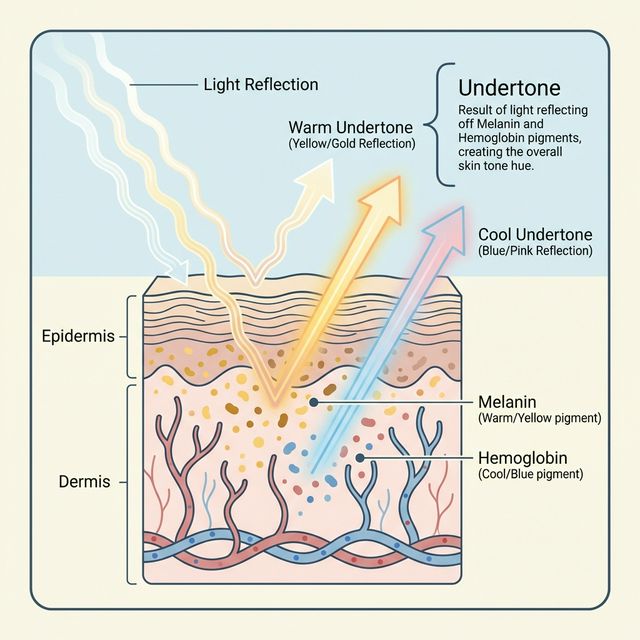
Figure 2: The Biology of Undertone. Undertone is not magic; it's biology. It is determined by the ratio of Hemoglobin (blue-based) to Melanin (yellow-based) in your dermis layer.
2. The Contrast Level (Value/Chroma)
This is the dynamic range between your features (Skin vs. Hair vs. Eyes).
- High Contrast: Dark hair/bright eyes against light skin (e.g., Winter). You need "sharp" boundaries.
- Low Contrast: Features blend together (e.g., Summer/Muted Autumn). You need "blended" colors.
Advanced Diagnostics: The Gold vs. Silver Test: Metal Theory Mythbusting: The Vein Test Myth: Why It Fail 40% of the Time Deep Dive: Undertone vs. Overtone: Why You're confused
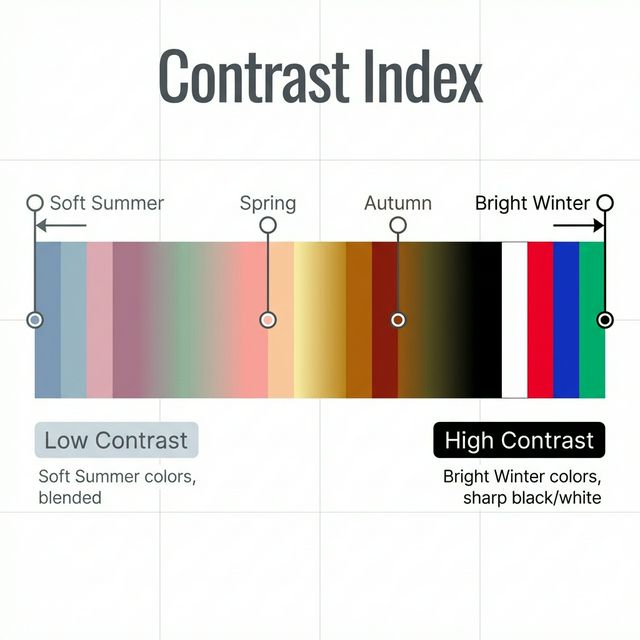
Figure 3: The Contrast Index Scale. Your best colors replicate your natural contrast level. A Low Contrast person disappears in High Contrast clothing (and vice versa).
The 12 Seasons Explained
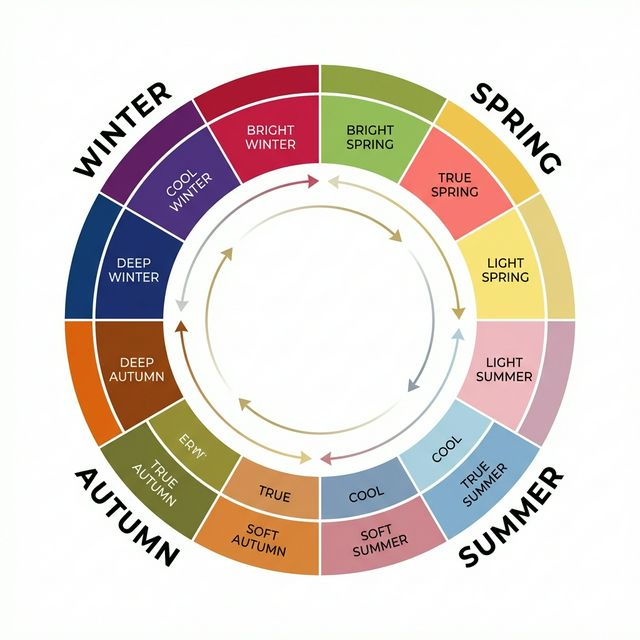
Figure 4: The 12-Season Flow Chart. Unlike the basic 4-season model, the 12-season system accounts for "Flow"—the transitional zones between temperatures (e.g., Warm Autumn flowing into Warm Spring).
🌸 The Spring Family (Warm, Clear, Light)
Springs are characterized by golden undertones and clarity. They cannot tolerate muddy or overpowering dark colors.
- Light Spring: Flows into Summer. Delicate and ethereal. Best in Camel, Peach, and Aqua. Read Guide
- True Spring: The Archetype. Warm and vivid, like a garden in bloom. Best in Golden Yellow, Coral Red, and Warm Pink. Read Guide
- Bright Spring: Flows into Winter. High contrast and electric. Can handle Poppy Red and Hot Turquoise. Read Guide
☀️ The Summer Family (Cool, Soft, Light)
Summers are defined by blue undertones and a "dusty" quality, like looking at a landscape through a twilight mist.
- Light Summer: Flows into Spring. Airy and cool. Best in Powder Blue, Lavender, and Soft Lemon. Read Guide
- True Summer: The Archetype. Cool and hazy. Best in Raspberry, Slate Blue, and Air Force Blue. Read Guide
- Soft Summer: Flows into Autumn. The most "greyed-out" palette. Sophisticated in Charcoal, Sage, and Dusty Rose. Read Guide
🍂 The Autumn Family (Warm, Muted, Deep)
Autumns are rich, earthy, and warm. They rely on depth and complexity rather than clarity.
- Soft Autumn: Flows into Summer. Golden but low contrast. Best in Olive, Salmon, and Oatmeal. Read Guide
- True Autumn: The Archetype. Harvest colors. Best in Rust, Mustard, and Chocolate Brown. Read Guide
- Deep Autumn: Flows into Winter. Rich and spicy. Best in Espresso, Aubergine, and Deep Rust. Read Guide
❄️ The Winter Family (Cool, Clear, Deep)
Winters are intense and sharp. They are the only seasons that truly harmonize with pure black and pure white.
- Deep Winter: Flows into Autumn. The darkest palette. Best in Black, Blood Red, and Midnight Blue. Read Guide
- True Winter: The Archetype. High contrast "Snow White" coloring. Best in Royal Blue, Emerald, and Pure White. Read Guide
- Bright Winter: Flows into Spring. Electric and neon. Best in Acid Green, Fuchsia, and Icy Yellow. Read Guide
Application: The Architect's Rule (60-30-10)
Knowing your palette is useless if you don't know how to construct an outfit. Professional stylists use the 60-30-10 Rule to ensure harmony.
- 60% Dominant Color: The "Canvas." Usually your jacket, trousers, or coat.
- Example: A True Summer should use Charcoal Blue or Rose Brown here, avoiding harsh black.
- 30% Secondary Color: The "Bridge." Usually your top or skirt.
- Example: A Deep Autumn might use Mustard or Rust to add warmth to a dark suit.
- 10% Accent Color: The "Spark." Shoes, bags, ties, or jewelry.
- Example: A Bright Winter uses Acid Yellow or Neon Pink here for high-impact contrast.
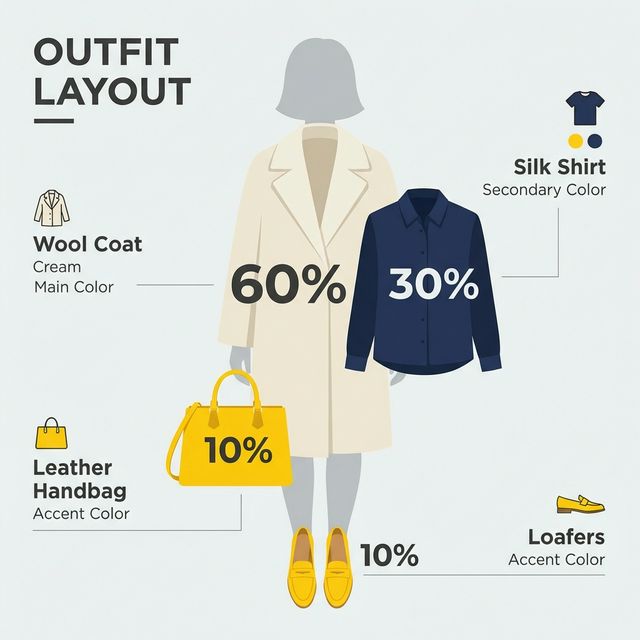
Figure 5: The Architect's Rule (60-30-10). The mathematical formula for a balanced outfit. Applying your palette using these ratios ensures harmony without looking like a "color swatch."
Style Lab: Mastering the 60-30-10 Rule for Your Season
The AI Advantage: Precision Over Guesswork
The human eye is easily tricked by environmental noise (lighting conditions). A warm light bulb can artificially shift a Cool Summer subject into a Warm Spring classification.
The Kombinlio AI eliminates this error using:
- Skin-Based White Balance: Normalizing your photo to a standard illuminant (CIE D65) to see your true skin tone.
- Facial Landmarking: Isolating "Regions of Interest" (iris, skin, hair) to calculate precise pigmentation ratios.
- Algorithmic Sorting: Mapping your Contrast Index and Undertone against the 12-season logic matrix.
📲 Get Your Analysis: The Best Color Analysis App lets you scan your face instantly to unlock your 12-season results and shopping palette.
🧠 Apply It: Once analyzed, use our Personal Stylist App to filter your entire wardrobe by your new palette.
Frequently Asked Questions
Can I be two seasons?
Technically no, but you can 'flow' between them. For example, a 'Deep Autumn' flows into 'Winter.' This means your primary characteristic is Warm/Muted, but your secondary characteristic is Deep. You can borrow the warmer, deeper colors from the Winter palette, but the coolest Winter colors will look disharmonious.
Does black look good on everyone?
No. Black is a Cool and Deep color. It harmonizes best with Winter seasons. On a Light Spring, black creates a 'floating head' effect. On a Soft Summer, it can look harsh and aging. If it’s not in your palette, keep it away from your face (use it for the 60% bottom or 10% shoe).
What if I have grey hair?
Grey hair cools down your overall contrast, often shifting you from a 'True' or 'Deep' season toward a 'Cool' or 'Soft' variation. However, your skin undertone (the hemoglobin/melanin ratio) remains constant. You likely need to adjust your Chroma (softness) rather than your Hue.
How does Kombinlio's AI know my season?
It uses computer vision to extract skin, hair, and eye pigments, calculates the CIELAB color space values, and matches them against the 12-season mathematical model. It eliminates lighting bias better than mirrors.
Correcting for Aging: The Kombinlio Guide to Adjusting Your Season
New data from Kombinlio reveals how melanin depletion shifts 68% of Winters into Soft Summers. Learn to adjust your palette.
Bright Spring Guide: The 'Clear & Warm' Palette Explained
A technical guide to the Bright Spring season (Warm + Clear). Learn why high-contrast, vivid colors are essential for this 'Tropical' season.
Bright Winter Guide: The 'Clear & Cool' Palette Explained
A technical guide to the Bright Winter season (Cool + Clear). Learn why neon-bright colors and high contrast are essential for this 'Diamond' season.
Deep Autumn Guide: The 'Dark & Warm' Palette Explained
A technical guide to the Deep Autumn season (Warm + Deep). Learn why rich, heavy colors are essential for this 'Gilded' season.
Deep Winter Guide: The 'Dark & Cool' Palette Explained
A technical guide to the Deep Winter season (Cool + Deep). Learn why black, charcoal, and damson are essential for this 'Mysterious' season.
Light Spring Guide: The 'Delicate & Warm' Palette Explained
A technical guide to the Light Spring season (Warm + Light). Learn why gentle hues and low contrast are essential for this 'Ethereal' season.
Light Summer Guide: The 'Delicate & Cool' Palette Explained
A technical guide to the Light Summer season (Cool + Light). Learn why gentle, airy colors are essential for this 'Cloud-Like' season.
Metal Theory: Gold vs. Silver for Your Skin Code
The definitive guide to matching jewelry metals with your skin undertone. Learn why some people shine in Gold while others glow in Silver.
Soft Autumn Guide: The 'Muted & Warm' Palette Explained
A technical guide to the Soft Autumn season (Warm + Muted). Learn why earthy, blended colors are essential for this 'Golden Hour' season.
Soft Summer Guide: The 'Muted & Cool' Palette Explained
A technical guide to the Soft Summer season (Cool + Muted). Learn why greyed-out, subtle colors are essential for this 'Velvet' season.
True Autumn Guide: The 'Warm & Rich' Palette Explained
A technical guide to the True Autumn season (Warm + Muted). Learn why rich, golden colors are essential for this 'Harvest' season.
True Spring Guide: The 'Warm & Clear' Palette Explained
A technical guide to the True Spring season (Warm + Clear). Learn why splashy, sunny colors are essential for this 'Golden' season.
True Summer Guide: The 'Cool & Muted' Palette Explained
A technical guide to the True Summer season (Cool + Muted). Learn why serene, rose-tinted colors are essential for this 'Watercolour' season.
True Winter Guide: The 'Cool & Clear' Palette Explained
A technical guide to the True Winter season (Cool + Clear). Learn why icy, sharp colors are essential for this 'Diamond' season.
Universal Colors Explained: The 4 Shades That Suit Everyone
A technical guide to Universal Colors (Teal, Navy, Stone, Red). Learn the color theory behind why these specific hues flatter every skin tone.
The 12-Season Color System: Technical Definitions & Munsell Coordinates
A comprehensive reference guide to the 12 seasonal color palettes, defined by their Hue, Value, and Chroma vectors. Learn the mathematical difference between True, Soft, and Deep seasons.
The Biology of Color: Melanin, Hemoglobin, and True Undertone
Stop looking at your veins. Learn the dermatological science behind skin undertones and how the ratio of Melanin, Carotene, and Hemoglobin defines your seasonal color palette.