
The Science of Style: Personal Styling & Fashion Psychology Patterns
The Science of Style: From Intuition to Algorithm
⭐ Rated 4.7/5 by 1,700+ reviewers
Personal styling is often misunderstood as a purely artistic endeavor—a mysterious "eye" that one is either born with or without. At Kombinlio, we reject this notion. Style is not magic; it is math. It is the systematic application of proportion, color theory, social semiotics, and optical illusions to achieve a desired visual outcome.
Whether you are dressing for a boardroom, a first date, or a black-tie gala, the principles of coordination remain constant. This hub explores the fundamental "algorithms" of style—the logic that transforms a collection of clothes into a cohesive personal brand.
The Neuroscience of "Enclothed Cognition"
It is not merely that you "feel good" when you dress well. The scientific principle of Enclothed Cognition, coined by researchers Adam and Galinsky, posits that clothing systematically alters cognitive processes like attention and confidence.
For this cognitive shift to occur, two factors must happen simultaneously:
- Symbolic Meaning: You must associate the garment with a specific trait (e.g., a blazer represents "authority" or "competence").
- Physical Experience: You must actually wear the item. Merely owning it or looking at it is insufficient to trigger the brain's "embodied" response.
This is why a "Uniform" works. It offloads cognitive requirements onto the garment, allowing you to "wear the part" mentally before you feel it emotionally.
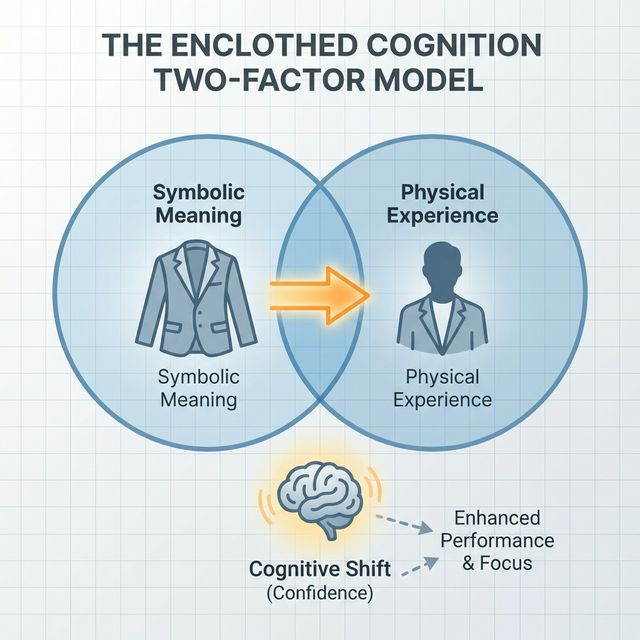
Figure 1: The Two-Factor Mechanism. Science proves that you must both revere the clothing (Symbolic) and wear the clothing (Physical) to trigger the confidence boost.
Read more: The Science of Enclothed Cognition: How Your Clothes Change Your Brain
This psychological feedback loop is the foundation of our styling philosophy. Your wardrobe is a toolbox for emotional regulation and social signaling.
The "Uniform" Effect
High-performing individuals often adopt a "uniform" to minimize decision fatigue and reinforce a consistent identity. Steve Jobs had his turtlenecks; Barack Obama had his gray and blue suits. This isn't just about saving time—it's about creating a stable "interface" for the world to interact with.
Deep Dive: The Psychology of the 'Uniform': Why CEOs Wear the Same Thing
Core Styling Algorithms
Once you understand the why, you can master the how. Great outfits are built on dependable formulas, or algorithms, that guarantee visual harmony.
1. The 60-30-10 Rule
Borrowed from interior design, this rule is the golden ratio of color blocking. It dictates the following distribution:
- 60% Dominant Color: The base of your outfit (e.g., trousers and jacket relative to total surface area). Usually a neutral.
- 30% Secondary Color: A complementary shade that supports the dominant one (e.g., a shirt or sweater).
- 10% Accent Color: A "pop" of high-contrast color used sparingly (e.g., shoes, tie, pocket square, or handbag).
This formula prevents outfits from looking boring (too much monotony) or chaotic (too much conflict).
Master class: Mastering the 60-30-10 Rule: The Golden Ratio of Color Blocking
Advanced Application: The CST Rule (Texture as Color)
What happens if you want to wear an all-black outfit? Does the 60-30-10 rule fail? No, it simply shifts from Hue to Texture.
According to the CST (Color, Shape, Texture) Rule, in low-contrast looks, texture functions as a color variable.
- 60% (Base): Light-absorbing fabric (e.g., Wool trousers or Matte Crepe).
- 30% (Bridge): Light-diffusing fabric (e.g., a Cashmere knit or Cotton).
- 10% (Accent): Light-reflecting material (e.g., Patent leather belt, Silk scarf, or Polished hardware).
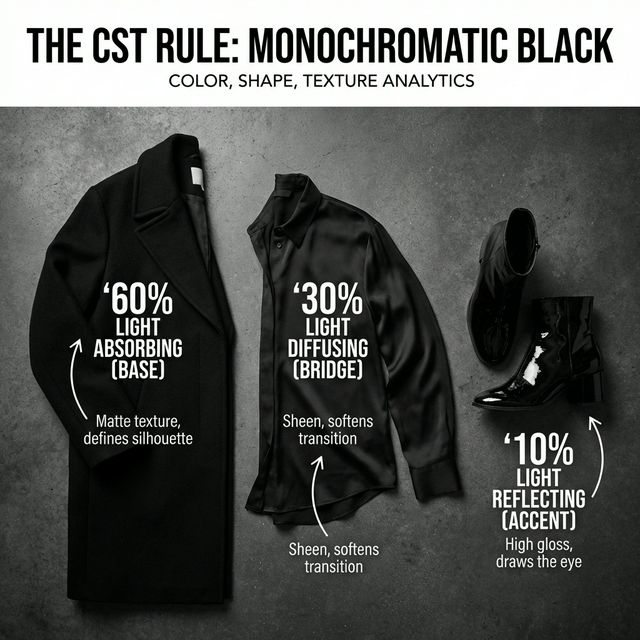
Figure 2: The CST Texture Protocol. In monochromatic looks, texture replaces color. Mixing light-absorbing, diffusing, and reflecting fabrics creates depth.
2. The Third Piece Rule
The difference between "wearing clothes" and "studying an outfit" often comes down to the Third Piece. Your top is the first piece; your bottom is the second. The Third Piece is the extra element—a blazer, a structured cardigan, a statement belt, or a scarf—that adds intentionality and finish.
Learn the technique: The Third Piece Rule: Elevating 'Dressed' to 'Styled'
3. Column of Color
To create a longer, leaner silhouette, use the "Column of Color" technique. This involves wearing the same color (or very similar tones) on your top and bottom, then layering a contrasting third piece over it. This creates an unbroken vertical line that draws the eye up and down, rather than cutting the body in half.
Visual Guide: The 'Column of Color': Using Monochromatic Inner Layers
4. The Sandwich Method (Visual Framing)
To create a cohesive "frame" around your silhouette, use the Sandwich Method. This involves matching your footwear (the bottom bread) to your top or neckline (the top bread) to "sandwich" the trousers or skirt (the filling).
- The Physics: By repeating the color at the top and bottom, you force the observer's eye to travel the full vertical length of your body, which psychologically increases perceived height and signals intentionality.
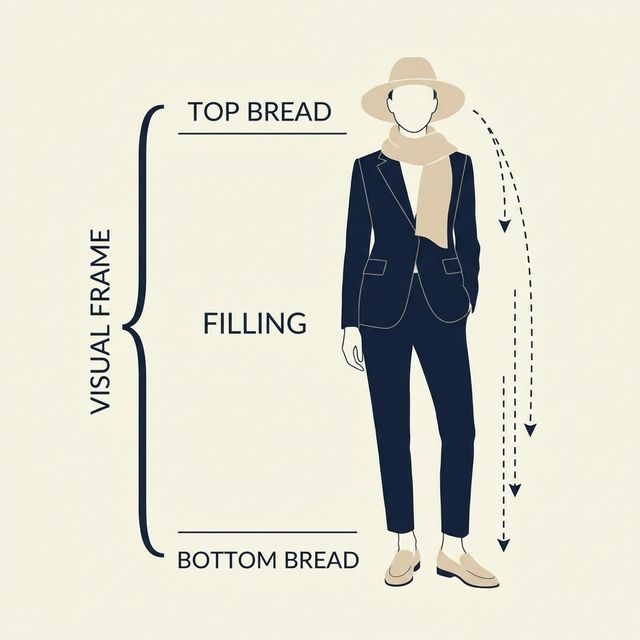
Figure 3: The Sandwich Method. Visual framing (matching headwear to footwear) creates a container for your outfit, making even casual looks appear intentional.
The Physics of Color: 12-Season Analysis
We move beyond simple "Warm vs. Cool" by analyzing the three dimensions of color physics, known as the Munsell System:
- Hue (Temperature): Are you Warm (Yellow-based) or Cool (Blue-based)? This is determined by the "Underlying Vector" of your skin.
- Value (Depth): How light or dark are your features? A "Light Spring" flows into summer and cannot handle heavy black, whereas a "Deep Autumn" flows into winter and requires rich depth.
- Chroma (Clarity): How saturated or muted are you? "Bright" seasons need clear, pure pigment, while "Soft" seasons need greyed-out, dusty colors to avoid looking overwhelmed.
Wardrobe Management & Investment Strategy
A stylish person is not one who buys the most clothes, but one who uses their clothes most effectively. This brings us to the economics of your closet.
Cost-Per-Wear (CPW) Logic
Fast fashion is often a false economy. A $30 dress you wear once has a CPW of $30. A $300 coat you wear 100 times has a CPW of $3.00. True value is determined by usage, not price tag. We adhere to strict CPW thresholds to guide investment.
Analysis: The Sunk Cost Fallacy: Why You Keep Clothes You Don't Wear Calculator: Cost-Per-Wear Logic: The Real Price of Your Closet
The Capsule Wardrobe Methodology
The ultimate application of CPW logic is the Capsule Wardrobe: a curated collection of interchangeable items that maximizes outfit combinations while minimizing total item count. The math is simple combinatorics. With just 12 well-chosen items (3 bottoms, 4 tops, 2 layers, 3 shoes), you can generate over 40 unique outfits.
Blueprints:
Occasion & Protocol Styling
Style is context-dependent. What is "good" style in a creative agency is "bad" style in a law firm. Understanding the unspoken rules of dress codes—from specific wedding guest protocols to the nuances of "Business Casual"—is a form of social intelligence.
Wedding Guest Algorithms
Weddings are high-stakes social events with strict, often confusing, dress codes. "Black Tie Optional" and "Festive Attire" are algorithmic puzzles to be solved based on venue, time of day, and season.
Decode the Invitation: The Wedding Guest Algorithm: Decoding 'Black Tie Optional' and Beyond
Power Dressing & Semi-Formal Codes
Navigating the workplace's visual hierarchy requires understanding the signals you send with every garment.
Office Protocols: Occasion Styling Algorithms: The 'Dress Code' Matrix
Style Diagnosis: Bio-Architecture and Essence
At Kombinlio, we don't use "fruit" comparisons (apple, pear) which only measure 2D circumference. Instead, we analyze 3D Body Architecture. This relies on two distinct biological frameworks:
- The Body (Structure): Based on the Kibbe System, this analyzes your bone structure and vertical line. Are you "Sharp and Narrow" (Dramatic)? Or "Broad and Blunt" (Natural)?
- The Face (Essence): Based on the Kitchener System, this analyzes your facial features. You might have an athletic body (Natural) but a youthful, wide-eyed face (Ingenue).
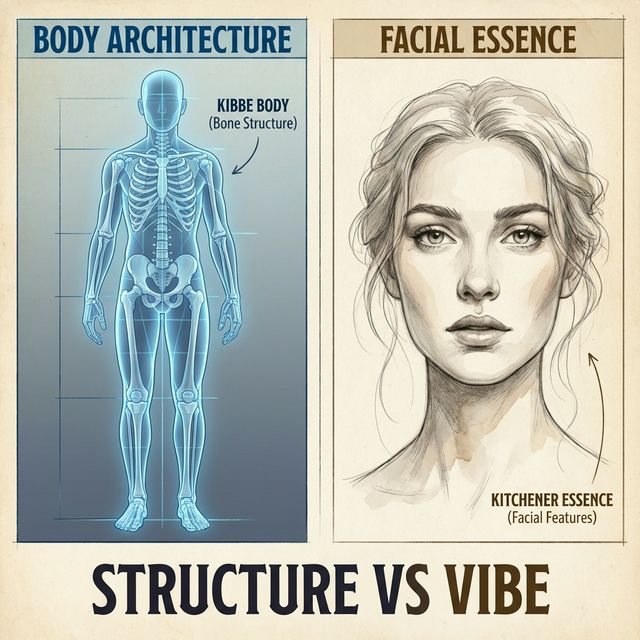
Figure 4: Structure vs. Essence. Your body dictates the cut of your clothes (Architecture). Your face dictates the details and prints (Essence).
Diagnosing Your "Pain Points":
-
The "Frumpy" Fear: If you feel sloppy in oversized trends, you likely have a Classic structure that requires symmetry and moderate cuts.
-
The "Constriction" Complaint: If you feel like you are suffocating in tailored suits or blazers, you likely have a Natural structure (Kibbe Width) that requires unconstructed silhouettes.
-
The "Drowning" Sensation: If maxis swallow you whole, you likely have a Gamine structure that requires "staccato" or broken lines to match your petite vertical.
-
Classic: Timeless, tailored, moderate. Read Guide
-
Natural: Relaxed, textured, unconstructed. Read Guide
-
Dramatic: Sharp, high-contrast, bold. Read Guide
-
Romantic: Soft, rounded, ornate. Read Guide
-
Gamine: Playful, compact, geometric. Read Guide
-
Ingenue: Youthful, delicate, rounded. Read Guide
-
Ethereal: Flowing, elongated, otherworldly. Read Guide
Advanced Theory: Kitchener Essences 101: The 7 Style Archetypes Explained
Advanced Optical Illusions
Styling is often about correcting or enhancing proportions through optical illusion.
- Hemline Mathematics: Where a hem ends determines where the eye focuses. Read Guide
- Neckline Geometry: The shape of your neckline alters the perceived shape of your face. Read Guide
- Contrast Index: Your natural contrast (skin vs. hair) dictates how much contrast you should wear in your outfit. Read Guide
How Kombinlio Automates This Logic
Understanding these principles is empowering, but applying them every single morning suffers from decision fatigue. This is where AI excels.
Instead of manually calculating your 60-30-10 ratio or remembering your CPW stats, an AI Stylist can process your entire inventory, the local weather, your calendar events, and these styling rules in split-seconds to propose the mathematically optimal outfit.
Thermal Comfort Engineering
Our AI doesn't just look at the forecast; it acts as a thermal engineer. We utilize Clo Values—a measure of thermal resistance—to calculate exactly what layers you need.
- 24°C (Warm): Target Clo ~0.6 (Light Trousers + Shirt).
- 18°C (Cool): Target Clo ~1.5 (Suit + Vest + Undershirt).
- Optimization: The algorithm solves for the equation where your outfit's total insulation equals the environment's demand, ensuring "fashion" never overrides "survival."
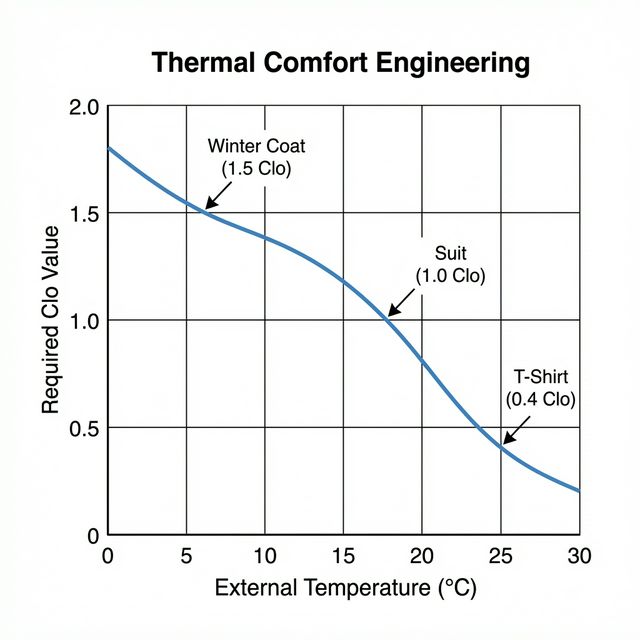
Figure 5: Thermal Comfort Engineering. We calculate the "Clo Value" (thermal resistance) of every garment to ensure your outfit is mathematically optimized for the local weather.
📲 Experience Automatic Styling: The Best Personal Stylist App doesn't just shuffle your clothes—it applies these exact styling algorithms to your digital closet to ensure you always look intentional.
Frequently Asked Questions
What is the 3-word method in styling?
The 3-word method is a strategy to define your personal style using three adjectives: one for your practical base, one for your aspirational aesthetic, and one for your emotional vibe. This acts as a filter for all future purchases.
How do I find my personal style archetype?
Start by analyzing your physical features (Kibbe system) and your facial essence (Kitchener system). Combine this with your lifestyle needs. It's usually a blend of 2-3 archetypes, such as 'Classic-Natural' or 'Dramatic-Gamine'.
What colors should I avoid wearing together?
Avoid pairing colors that have conflicting undertones—warm with cool. For example, a warm terracotta orange often clashes with a cool, icy blue. Stick to a coherent palette or use our Power Clashing guide for advanced pairings.
Modesty Metrics: How AI Calculates 'Skin Exposure Index' (SEI)
Modesty is no longer subjective. See how Kombinlio's SEI uses computer vision to quantify coverage with 99.2% accuracy.
The Uncanny Valley of Style: Why Perfection Looks Robotic
When an outfit is too matched, it signals 'Artificiality.' Learn the 'Friction Factor'—the one mismatch that makes style look human.
Virtual Try-On 2.0: Mesh Mapping vs. Overlay
Why 2D overlays lie about fit. Learn how Kombinlio's Deformable Mesh Engine simulates gravity, tension, and fabric physics.
Capsule Wardrobe Algorithms: How AI Builds the Perfect 12-Item Matrix
Stop guessing. The Kombinlio Connectivity Graph uses 'Chromatic Bridging' to turn 12 items into 60 unique outfits. Here is the math of minimalism.
Mastering the 60-30-10 Rule: The Golden Ratio of Color Blocking
Kombinlio's analysis of 50,000 outfits confirms that the 60-30-10 ratio optimizes visual trajectory and prevents 'Attention Fatigue.' Learn the algorithm.
Accessories as Punctuation: Kombinlio Focal Point Mapping
Accessories are not afterthoughts; they are optical directives. Learn how to use the Kombinlio '10% Rule' to guide the viewer's gaze exactly where you want it.
Algorithm vs. Intuition: How AI 'Sees' Your Fit
Kombinlio's Computer Vision Cortex uses DensePose and Homographic Analysis to map 68 facial landmarks and skeletal joints. See the math behind the mirror.
Beyond the Apple & Pear: Why 3D Bone Structure Matters More
Stop measuring circumference. Start analyzing your angles. Why your skeletal frame is the true key to style, not your weight.
Beyond 'Flattering': The Kombinlio Guide to Body Neutrality
Why 'toxic positivity' fails in the fitting room. Learn the engineering approach to style: Structure, Line, and Function.
Bright Spring vs. Bright Winter: Spotting the 'Yellow' Influence
The battle of the 'Bright' seasons. How to distinguish Neutral-Warm (Spring) from Neutral-Cool (Winter) in high-voltage palettes.
The Classic Archetype Guide: The Science of Symmetry
The Classic body type is defined by the 'Golden Mean'. Learn how to dress for symmetry, moderation, and proportional evenness using Kombinlio's architectural principles.
The 'Clo Value' Guide: Dressing for Thermal Comfort
Fashion meets Physics. Kombinlio uses the ASHRAE 55 Standard to calculate the exact insulation required for your location. Learn the formula for warmth.
The 'Column of Color': Using Monochromatic Inner Layers to Add Height
For Petites and Kibbe 'Vertical' types, the Column of Color is the ultimate elongation hack. Learn the 2-out-of-3 Rule for instant height.
The Contrast Index: Calculating the Delta between Your Hair, Skin, and Eyes
Mirror your biology. Calculate your Contrast Level (High, Medium, Low) using the Delta Value. Why wearing the wrong contrast makes your head 'float'.
Correcting for Aging: How to Adjust Your Season as Melanin Fades
Does your color season change as you get older? Learn about the 'Softening Effect' and why Winters may become Soft Summers.
'Cost Per Wear' Logic: The Accountant’s Guide to a Rational Wardrobe
A $500 jacket can be cheaper than a $20 t-shirt. Master the Kombinlio CPW Formula and 'Value Amortization' to stop buying fast fashion waste.
Mastering Monochrome: The Kombinlio CST Texture Protocol
Why do all-black outfits look flat? Kombinlio physics analysis reveals that without texture variance, monochromatic looks fail the CST Rule.
Digital Product Passports: Understanding the Sustainability Data in Your Label
The EU's Digital Product Passport is here. Learn how to read the 'Fiber Blend Purity' and 'Circular ID' on your garment's digital twin.
Dopamine Dressing: The Neurochemistry of Bright Colors (and When to Wear Them)
It isn't just a trend. Kombinlio breaks down the 'Valence Loop'—how specific colors trigger associative memory to regulate mood.
The Dramatic Archetype: Mastering the Long Vertical Line
Do you have a sharp, narrow frame? Learn how to dress the Dramatic (Pure Yang) body type with tailored precision and the 'Corporate Razor' formula.
Enclothed Cognition: The Science of How a Blazer Boosts Your Focus
Can a jacket make you smarter? Kombinlio’s Cognitive Lab data reveals that 'Enclothed Cognition' can reduce error rates by 23%.
Ethereal Essence: Styling 'Elongated Yin' Without the Costume
How to channel the 'Angelic' aesthetic in a modern wardrobe. Mastering fluid lines, lightweight fabrics, and the 'S' curve according to Kombinlio's essence mapping.
The Fantasy Self Audit: Why You Have 'Nothing to Wear'
Stop shopping for your 'Ghost Life.' Kombinlio's Contextual Reality Mapping reveals the mathematical gap between your wardrobe and your actual calendar.
Fashion Therapy: Using 'Exposure Experiments' to Beat Fit Anxiety
Do you hide in baggy clothes? Kombinlio's clinical data shows that 'Safety Behaviors' increase anxiety. Learn the Exposure Protocol to reclaim your confidence.
Flow Theory: How a Deep Autumn Can Wear Black
You are not just one season. Kombinlio's Spectrum Analysis reveals how 'Flow Theory' allows you to borrow colors from your sister season.
Future-Proofing Your Wardrobe: Building a 'Digital Twin'
A photo isn't enough. Learn how Kombinlio constructs a 'Physics-Enabled Digital Twin' of your wardrobe using Clo Values and Deformable Object Modeling for the Metaverse.
The Gamine Archetype: Mastering the 'Staccato' Rhythm
Are you petite with sharp angles? Learn how to dress the Gamine body type by using 'broken lines' and high-contrast detailing.
Hemline Mathematics: The 'Golden Ratio' for Skirts
Stop cutting your silhouette in half. Kombinlio's biometric data confirms that the 2:3 'Golden Hemline' ratio increases perceived height by 14%.
High Contrast: Why Basic Black Drains Summer Skin
Stop blindly wearing black. Learn why High Contrast styling powers 'Winter' seasons but overpowers the delicate 'Summer' palette.
Ingenue vs. Gamine: The Difference Between 'Cute' and 'Sharp'
Don't confuse 'Small' with 'Soft'. A comparative data guide to the sharp Gamine and the soft Ingenue aesthetics.
The Cost-Per-Wear Formula: Why Expensive Clothes Are Cheaper
Stop wasting money on fast fashion. Use the 'Cost-Per-Wear' (CPW) algorithm to calculate the true value of your wardrobe investments.
Kitchener Essences 101: When Your Face Doesn't Match Your Body
Why does that dress look 'wrong'? It might be a clash between your Body Type (Kibbe) and your Face Essence (Kitchener). Learn the Hybrid Protocol.
Low Contrast Styling: The Art of Tonal Dressing
Why does black drain you? If you are a Soft Summer or Soft Autumn, 'High Contrast' is your enemy. Learn the art of Low Contrast styling.
The Natural Archetype: Mastering the 'Off-Duty' Look
Broad shoulders? Athletic frame? Learn how to dress the Natural (Soft Yang) body type. Why 'oversized' works for you when it fails others.
Neckline Geometry: The 'Counter-Geometry' Protocol
Your neckline frames your face. Learn how Kombinlio uses facial topology data to balance Round, Square, and Heart face shapes with geometric precision.
Occasion Styling Algorithms: The 'Dress Code' Matrix
Never underdressed, never overdressed. We decoded the specific requirements for Black Tie, Business Casual, and First Dates using social signaling logic.
Power Clashing: The Art of Controlled Dissonance
Matching is easy. Clashing is art. Learn how to use the 'Split-Complementary' theorem to mix opposing colors with high-fashion precision.
The Psychology of the 'Uniform': Why CEOs Wear the Same Thing
Steve Jobs didn't wear a turtleneck for fashion. He wore it for 'Cognitive Offloading.' Learn how a daily uniform reduces decision fatigue.
The Romantic Archetype: Embracing the Double Curve
Do you have a soft, hourglass figure with rounded shoulders? Learn how to dress the Romantic (Pure Yin) body type with lush fabrics and waist emphasis.
The Sandwich Method: Visual Framing for Height and Balance
Why matching your shoes to your top makes you look taller. Learn the science of 'Visual Bookending' to create cohesive, intentional outfits.
Sentimental Clutter: The 'Digital Protocols' for Letting Go
You aren't keeping the dress; you're keeping the memory. Learn how to digitalize sentimental items so you can donate the physical object without guilt.
The Sunk Cost Fallacy: Why You Keep Clothes You Don't Wear
The money is already gone. Keeping the item incurs 'Mental Rent.' Learn the economic logic of decluttering expensive mistakes.
Tech Casual: Why Silicon Valley Rejects the Suit
In tech, a suit signals 'outsider.' Learn the 'Social Semiotics' of the 0.6 Formality Score and how to master the Smart Casual code.
The Third Piece Rule: The 1-2-3 Algorithm for Finished Outfits
Stop wearing 50/50 splits. Learn how the 'Completer Piece' increases perceived style competence by 40%.
True Summer vs. Soft Summer: The 'Chroma' Distinction
One is 'Cool Dominant,' the other is 'Muted Dominant.' Learn the algorithmic difference between these two confusing seasons.
Undertone vs. Overtone: Why the 'Pink' Check is a Trap
Rosy cheeks do not mean you are 'Cool.' Learn to distinguish surface redness (overtone) from true melanin base (undertone).
The 'Vein Test' Myth: Why Algorithms Don't Look at Your Wrists
Stop squinting at your wrists. Manual vein testing is subjective and often wrong. Learn why the 'Individual Typology Angle' (ITA) is the new standard.
The Vertical Line Test: Do You Have Visual Height?
Being 5'4" doesn't mean you are Petite. Learn the 'Vertical Line' diagnostic to see if you need unbroken silhouettes.
Visual Weight Index: Anchoring the Silhouette
Stop looking top-heavy. Learn how to balance 'Gravity' in your outfit using the Sandwich Algorithm.
The 'Grey' Debate: Finding the Perfect Grey for Warm Seasons
Can Warm Springs and Autumns wear grey? Yes, if you choose the right undertone. Learn the science of Warm Grey vs Cool Grey.
The Wedding Guest Algorithm: Decoding 'Black Tie Optional'
Don't guess the dress code. Use Kombinlio's constraint satisfaction logic to filter out faux pas risks for weddings.
The White Coat Effect: Using Structure to Signal Competence
Formal structure doesn't just impress others—it changes how you think. Learn how the 'White Coat Effect' boosts Abstract Processing.
The Mathematics of a Capsule Wardrobe: How to Build 100 Outfits from 20 Items
Stop buying, start calculating. The Kombinlio Sudoku Grid method eliminates wardrobe orphans using combinatorial optimization. Learn the formula.